Who we are
What’s on
Next steps
Familien Vejle
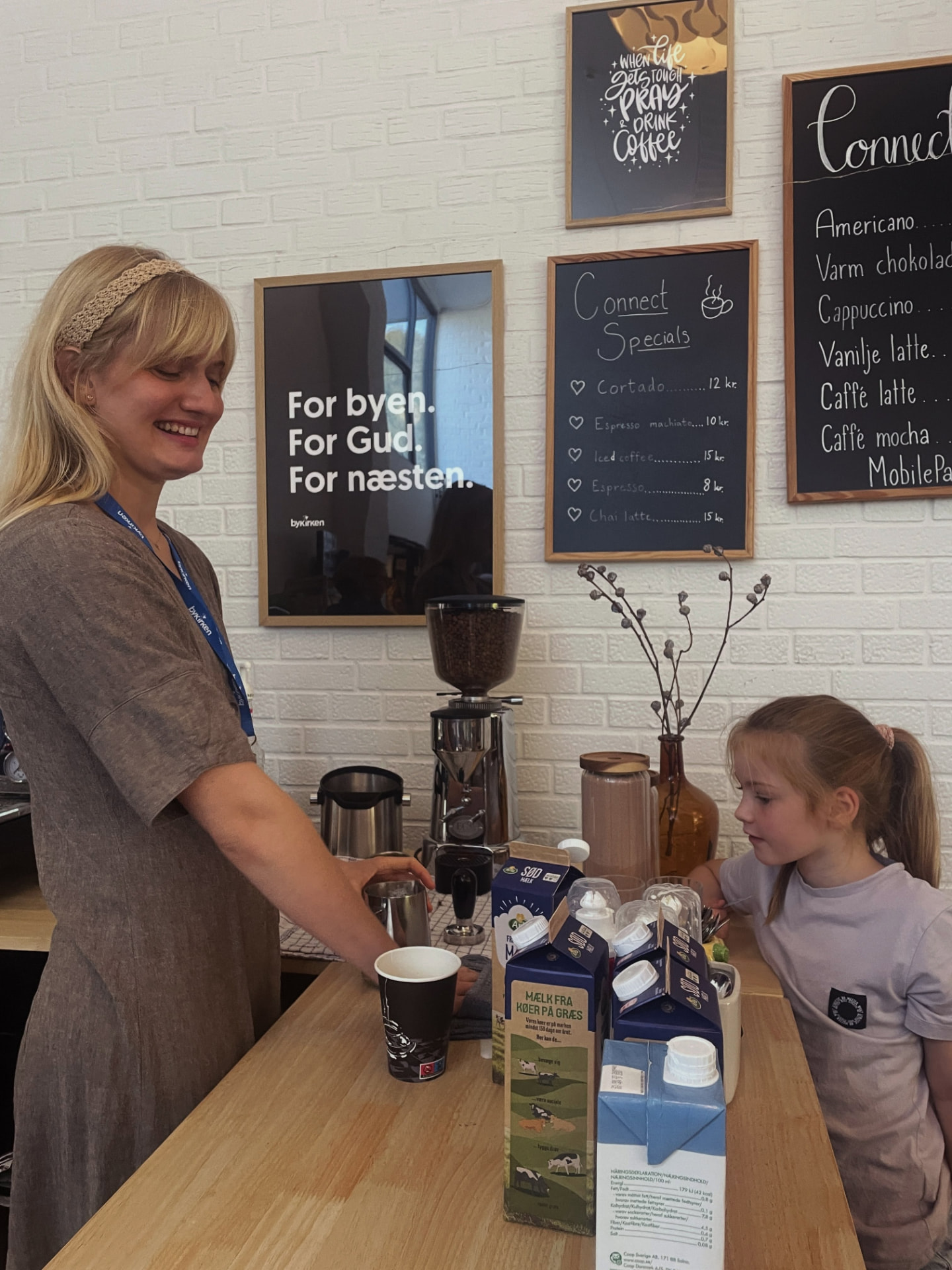
Familien Vejle is Bykirken’s diaconal community, where we walk alongside one another in life and faith. Relationships are at the centre, with room for presence, conversation and community.
We believe diaconal work is about how we are together more than about what we give. That is why we focus on walking alongside, community and pastoral care, where people meet with equal dignity.
We come together in Familien Vejle in a number of different ways:
Some groups and courses vary throughout the year. You can find us on Facebook in the group Familien Vejle. We’d love to meet you!
Contact and info
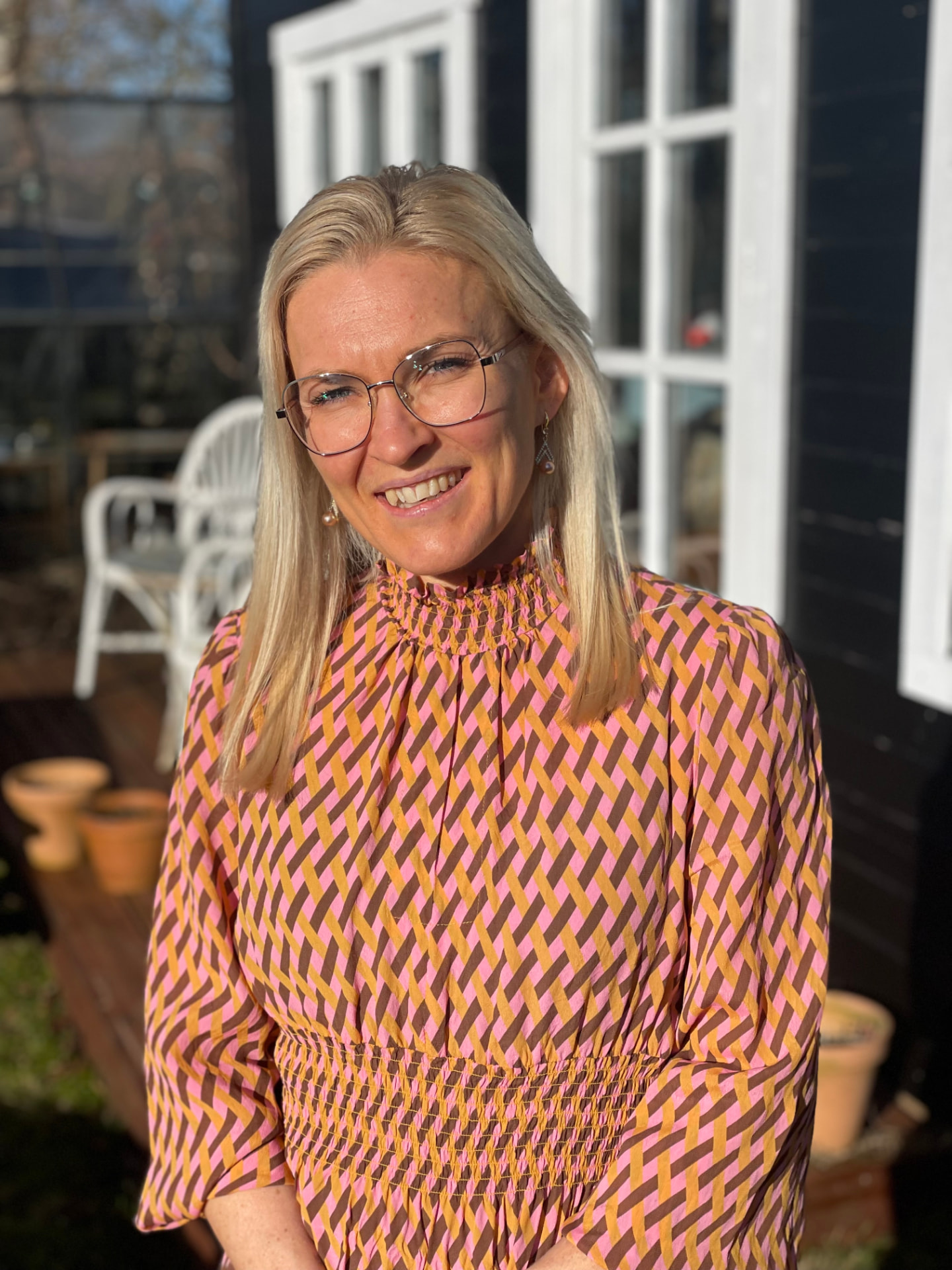
Maria has led Familien Vejle, the church’s diaconal work, since 2021 and became diaconal pastor in spring 2026. Alongside her work at Bykirken she is studying for a master’s in theology at Aarhus University, with practical theology from Menighedsfakultetet as a supplementary subject. She also holds a master’s (cand.mag.) in history and classical studies.
Maria lives in Gadbjerg with her husband Jens and their two children. She enjoys card and ball games in her free time, but has a reputation as a bad loser, even at UNO with her children.
Forms of diaconal work at Bykirken
By diaconal pastor Maria Grothe Hjort
Throughout the church’s history, diaconal work has taken shape in different contexts, and it matters to us to be aware of the framework we are part of today. That is why we work from a theological profile that recognises that we do diaconal work in a welfare state. Here it is crucial for us to hold on to the difference between what is given as a right and what is received as a gift. Where the welfare state is built on claims and entitlements, diaconal work springs from grace, and the gospel is a gift that is given.
Poverty is not understood first as an economic condition, but as a human and spiritual one. This means our diaconal work is not first about what we give, but about how we are together. That is why we have a clear walking-alongside profile, with relationships at the centre. Diaconal work takes concrete form in community, walking alongside and pastoral care, where we walk with people through life instead of standing outside trying to fix things.
We differ from a way of thinking in which economic growth is the foundation for happiness and human worth. We meet people not as social problems or projects, but as people made in the image of God. That is why we also trust people with responsibility. To give responsibility is to give dignity and to take seriously that everyone has something to contribute. Here it is not need that is at the centre, but our shared life. When we let the image of God stand above social divides, diaconal work becomes universal and unfolds in a community where we both give and receive.